LEGO® Bluey
- 4.5
- Rating
- 5.00M
- Installs
- Free
- Price
 Analysis by App-foxy
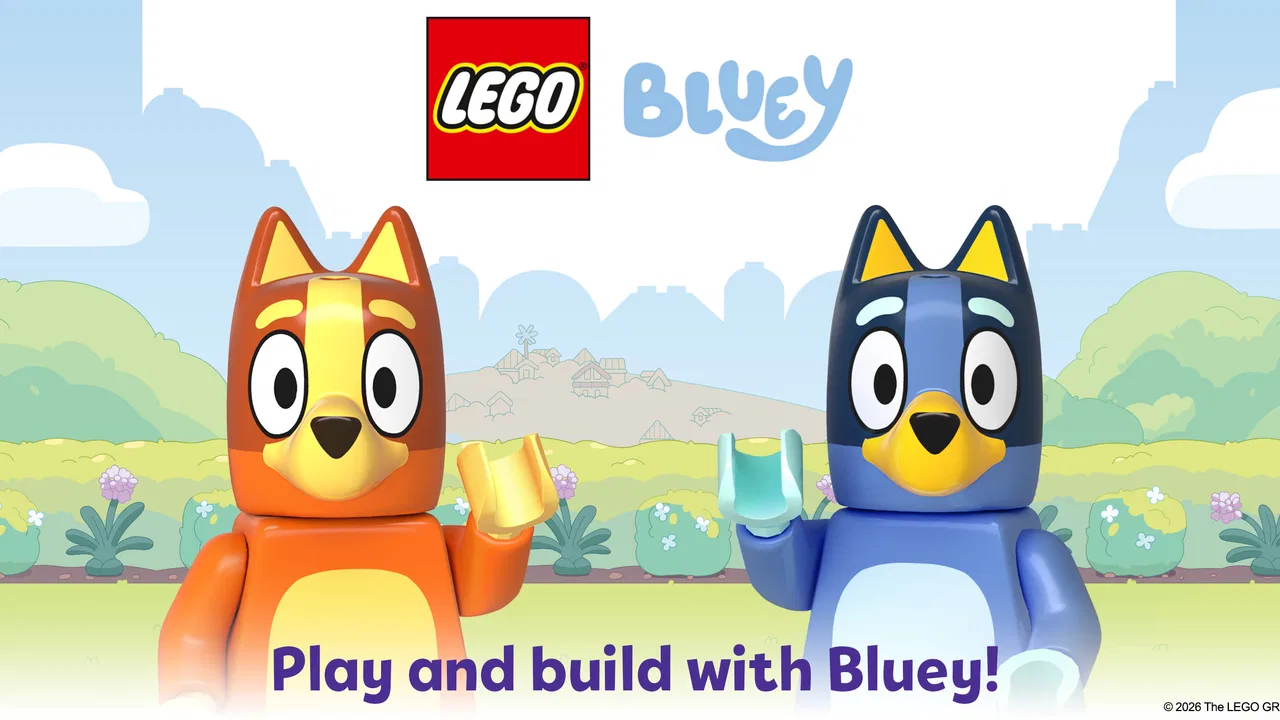
LEGO® Bluey is the kind of educational game I would put in front of a child who already enjoys Bluey and likes building more than competing. It brings Bluey and her friends into a playful LEGO setting, so the appeal comes from combining familiar characters with hands-on construction rather than from difficult challenges or fast action. I found that distinction important: this is best approached as a calm creative play space, not as a traditional level-based game.
StoryToys is the developer behind the game, and the result feels aimed at young children who need simple invitations to explore. The game is free to start, has an Everyone age rating, and supports devices running Android 9 or later. Optional purchases range from $4.99 to $39.99 per item, so I would set expectations with a child before handing over the device. The free starting experience is useful for deciding whether the style suits your family, while the purchase options mean the app deserves the same attention as any other child-focused game.
What the first play session feels like
The first thing I noticed is how naturally the two brands fit together. Bluey gives the game its warm, imaginative personality, while LEGO gives children a familiar way to think about objects: choose pieces, put things together, and see a scene take shape. That combination makes the game easier to understand than an unfamiliar educational title with abstract puzzles or instructions.
You May Also Like

 Blood Strike: 2.5 Anniversary
Blood Strike’s Loadouts Turn Every Drop Into a Tactical Gamble
A close look at Blood Strike’s custom loadouts: how fast access to signature weapons reshapes its battle royale rhythm, rewards preparation, and narrows the gap between fights.

 Pandora - Music & Podcasts
Pandora’s Music Is Easy to Start, but Harder to Recover
Pandora’s strength is its low-effort path from a seed to a station. Its weak spot is how much confidence it asks you to place in connection, setup, and quiet recovery.

 8 Ball Pool
 Is Built on Rivalries, Rematches, and Routine
A close look at the rivalries, rematches, shared routines, and unanswered safety questions that turn a quick pool match into a persistent mobile community.

 Samsung Music
’s Quiet Strength Is Playing What You Already Own
Its reach comes less from spectacle than from dependable access to a personal library. That simplicity is both the app’s strongest retention engine and its ceiling.

 AccuWeather: Weather Radar
AccuWeather Review: A Quick, Clear Forecast for Everyday Decisions
For everyday plans, the best forecast is the one you can understand quickly. AccuWeather makes rain timing, radar, and local conditions easy to act on, with a few trade-offs.

 Hill Climb Racing
Why Hill Climb Racing Still Turns Crashes Into One More Run
A tiny car, a bumpy hill and one more upgrade: Hill Climb Racing keeps resurfacing because its simple chaos makes every near-miss feel personal.
More From Our News Desk



I would not describe it as an academic learning tool in the narrow sense. Its educational value is more practical and playful. Children can practise following prompts, recognising visual relationships, making choices, and staying with a small task until it looks complete. Those are modest skills, but they matter, especially for a child who becomes frustrated by worksheets or games that demand precise reading.
The store shows an average rating of 4.4 from around 7,600 ratings, and the game has passed one million installs. Those figures suggest that it has reached a substantial audience, but they do not tell me whether it will suit every child. A child who enjoys open-ended play may spend a long time experimenting, while another may want clearer goals and lose interest once the novelty of the characters fades.
My main advice is to treat the first session as a shared introduction. Sit beside the child, let them choose what catches their eye, and resist taking over the building. The useful moment is not simply finishing a scene; it is watching how the child decides what to do next. That gives you a better sense of whether the game is encouraging independent play or whether it still needs an adult nearby.
Getting through the first setup without pressure
On a first install, I would begin by checking that the device meets the Android requirement and that there is enough room for the app to install comfortably. I would also open the game before giving the phone or tablet to a child. That lets me see the opening flow, confirm that the controls feel manageable on the particular screen, and understand where optional purchases might appear.
This small preparation makes a noticeable difference. Young children usually do not distinguish between a free download and an optional paid item as clearly as adults do. If the game presents extra content during exploration, a child may reasonably assume that tapping the button is part of playing. I prefer to explain beforehand that some choices may require an adult, then handle those decisions myself.
The game is currently listed as version 3.1.0, so I would check that the installed copy has finished updating before judging the experience. More importantly, I would avoid starting the first play session when I am rushing. If the opening is interrupted by setup steps, a child can decide that the game is confusing before reaching the enjoyable part.
For a family using a shared tablet, I recommend choosing a comfortable position and cleaning the screen first. That sounds ordinary, but building-style play depends on seeing small visual details and tapping accurately. A larger tablet can make the experience easier for younger children than a small phone, particularly when several objects are visible at once.
Finding the first meaningful success
The first useful milestone is not completing every available activity. It is helping the child make one deliberate choice, carry it through, and recognise the result. I would start by asking, “What do you want to build or explore first?” rather than immediately explaining every control. If the child taps something interesting, I would let that action lead the session.
When a building prompt appears, I would encourage the child to look at the shape or position of the needed piece before tapping repeatedly. This turns the activity into a simple observation exercise. If the child gets it right, I would ask what changed in the scene. That question keeps the focus on noticing and reasoning instead of turning the game into a test with a correct answer.
One practical technique worked well for me: complete one small action, pause, and let the child describe what they think should happen next. This is especially helpful for children who normally rush through touch games. It also reveals whether they understand the visual language of the game or are simply tapping until something responds.
Another good routine is to let the child choose the order of two or three available actions, then return to the unfinished one later. That creates a gentle sense of planning without adding pressure. If the child becomes stuck, I would offer a choice between two actions rather than giving the solution. “Do you want to try the red piece or look around first?” keeps ownership with the child.
The best early success is independent decision-making, not speed. LEGO® Bluey works most effectively when the adult creates enough space for the child to experiment. Taking the device back to demonstrate the “right” way may finish the task faster, but it removes the part of the experience that makes the game educational.
Where new users may feel confused
The biggest possible source of confusion is the difference between familiar character play and game instructions. A child may expect the characters to behave like an episode of Bluey, while the app asks them to interact with building activities. I would explain that the characters are guides for play, not a replacement for watching an episode. That simple expectation-setting prevents disappointment.
Touch controls can also be misunderstood. Younger players often tap every visible object, then assume the game is not responding when only certain items are interactive. Instead of saying “That does nothing,” I would ask the child to look for visual clues and try one object at a time. This turns a moment of uncertainty into a small lesson in careful observation.
Another point worth watching is the meaning of completion. A child may finish one construction step and believe the whole activity is over, or may keep searching for a hidden requirement when the scene is already complete. I found it helpful to ask, “Does this look finished to you?” before moving on. The child learns to judge the result rather than waiting for an adult to confirm it.
Purchases are a separate kind of confusion. Because the game is free to download but includes optional items priced from $4.99 to $39.99, I would never assume that a child understands the difference between an in-game choice and a payment choice. I would handle purchasing settings personally and use the free portion as a trial. If the child enjoys the core play, then I can decide deliberately whether additional content is worth the cost.
How it fits into an ordinary family routine
A realistic use case is a short transition after school. A child may need a quiet activity while dinner is being prepared, but may not be ready for a demanding reading or maths app. I would offer LEGO® Bluey for a limited, clearly explained session and suggest one goal: build one thing, explore one area, or show me one detail afterward. That keeps the game from becoming an endless background activity.
It can also work as a shared activity between siblings with different ages, although the older child may naturally take control. I would give each child a separate role, such as choosing the next action and describing what changed. The game itself does not need to become competitive. In fact, keeping the session cooperative better matches its gentle creative style.
For travel, I would test the complete opening experience before leaving home rather than assuming everything will work exactly as expected in a new environment. I would also make sure the child knows which parts they can access independently. A game that is enjoyable with an adult beside them may feel frustrating if the child is suddenly expected to navigate it alone in the back seat.
Short sessions are a strength here. The game does not need to replace outdoor play, drawing, physical LEGO bricks, or conversation. I see it as a useful bridge between screen time and creative play. After finishing a scene, a parent could ask the child to rebuild the idea with real bricks or draw what they remember. That follow-up gives the digital activity a purpose beyond keeping the screen busy.
What it does better than familiar alternatives
Compared with a standard puzzle game, this title has a stronger emotional entry point for children who already know Bluey. The characters can make a child more willing to try an unfamiliar activity, while the LEGO theme gives the interaction a concrete visual structure. A purely educational app may explain a skill more directly, but it may not earn the same immediate attention from a child who wants imaginative play first.
Compared with watching an episode, the game asks the child to make choices instead of only following a story. That difference is its clearest reason to exist. It offers a small amount of agency: the child can interact with the scene and take part in making something happen. It is still screen-based entertainment, but it is more active than passive viewing.
Compared with physical LEGO, the digital version is quicker to start and easier to reset. There are no loose pieces under the sofa and no need to sort a box before building. On the other hand, it cannot provide the same tactile feedback, spatial challenge, or open-ended construction that real bricks offer. If the goal is fine-motor practice or deep physical creativity, I would choose actual LEGO and use this game as a companion rather than a substitute.
Compared with open-ended sandbox games, LEGO® Bluey is likely to feel more approachable for a young first-time player, but less flexible for an older child who wants complete control. That trade-off is important. The guided nature helps beginners reach a successful action, while it may eventually feel limiting to children who want to invent their own rules and structures.
Who should try it, and who should skip it
I think this is a strong match for young Bluey fans, children who enjoy building themes, and families looking for a gentle educational game with a recognisable setting. It is also a sensible starting point for a child who finds competitive games stressful. The Everyone rating supports its broad family positioning, though adults should still supervise how the child handles optional purchases.
I would be more cautious if the child expects a long story, complex missions, or a large world to master. This is not the choice I would make for a child asking for advanced strategy, serious problem-solving, or a game with a deep progression system. The same applies to children who dislike guided prompts and prefer making everything from scratch.
It may also be a poor fit for a family that wants a completely purchase-free experience. The initial price is free, but the presence of optional items means parents should make the spending decision rather than leaving it to the player. If that arrangement feels inconvenient, a paid-up-front creative app or physical building set may be more comfortable.
Finally, I would skip it as a replacement for educational practice that needs measurable progress. The game can support attention, choice-making, and creative thinking, but I would not use it as the only tool for learning letters, numbers, reading, or other structured skills. Its educational benefit comes through play, not through a formal lesson plan.
My practical verdict after settling into it
LEGO® Bluey succeeds because it gives a child an inviting first step: familiar characters, a building theme, and interactions that are easier to approach than many conventional educational games. I especially like the way it can turn a few quiet minutes into a shared conversation about choices, shapes, and finished creations.
Its limitations are just as clear. The experience may be too guided for children who want unrestricted construction, and the optional purchases require responsible adult handling. It also cannot replace physical building or a focused learning app. Those are not reasons to dismiss it; they simply define the role it plays best.
For a first-time user, I would install it, explore the opening privately, and then sit with the child for the first meaningful action. Let them choose, ask them to notice the result, and stop while the activity still feels enjoyable. That approach makes the game easier to understand and gives you a fair view of its value before considering any extra content.
StoryToys has made a friendly educational game for families who want play to feel familiar rather than instructional. My recommendation is positive for younger Bluey and LEGO fans, especially when an adult treats the app as a short creative activity instead of an all-purpose learning solution. If that is what you are looking for, the free starting point makes it easy to try; if you need tactile building, deep progression, or formal teaching, another option will serve you better.
FAQs for LEGO® Bluey
01What is LEGO® Bluey, and how does it work?
LEGO® Bluey is a mobile game that combines the creativity of LEGO building with the beloved characters and world of Bluey. Players can engage in various interactive activities, solve puzzles, and build unique LEGO structures. The game is designed for children and families, making it both educational and entertaining.
02Is LEGO® Bluey suitable for all ages?
LEGO® Bluey is primarily designed for children aged 4 and up, but it is enjoyable for the entire family. The game features age-appropriate content, intuitive controls, and engaging storylines that cater to younger players while offering challenges and creativity for older participants.
03Does LEGO® Bluey require an internet connection to play?
While LEGO® Bluey can be played offline, certain features and updates may require an internet connection. To access new content, download updates, or participate in online events, connecting to the internet is recommended. However, basic gameplay and most features are available offline.
04Are there in-app purchases in LEGO® Bluey?
Yes, LEGO® Bluey offers in-app purchases. These typically include additional LEGO sets, customization options, and special features. While the core game is free-to-play, players can enhance their experience through optional purchases. Parents can manage or restrict purchases through device settings to ensure controlled spending.
05What devices are compatible with LEGO® Bluey?
LEGO® Bluey is compatible with most Android and iOS devices. It requires a minimum operating system of Android 5.0 or iOS 11.0. For optimal performance, using a device with at least 2GB of RAM and a stable internet connection (for certain features) is recommended. Check the app store for specific device compatibility.
Pros
- Engaging gameplay for young children.
- Colorful and appealing graphics.
- Easy-to-use controls for all ages.
- Promotes creativity and imagination.
- Regular updates with new content.
Cons
- Limited levels in free version.
- In-app purchases can be costly.
- Requires constant internet connection.
- Some devices may experience lag.
- Limited parental control options.

LEGO® Bluey
Gallery